
The Seasonal HVAC Maintenance Checklist Every Southern Utah Homeowner Should Follow
St. George's summer heat puts more strain on AC systems than almost any other US city. Here's a seasonal maintenance guide specific to Washington County — what to do in spring, summer, and fall to avoid July emergency calls.
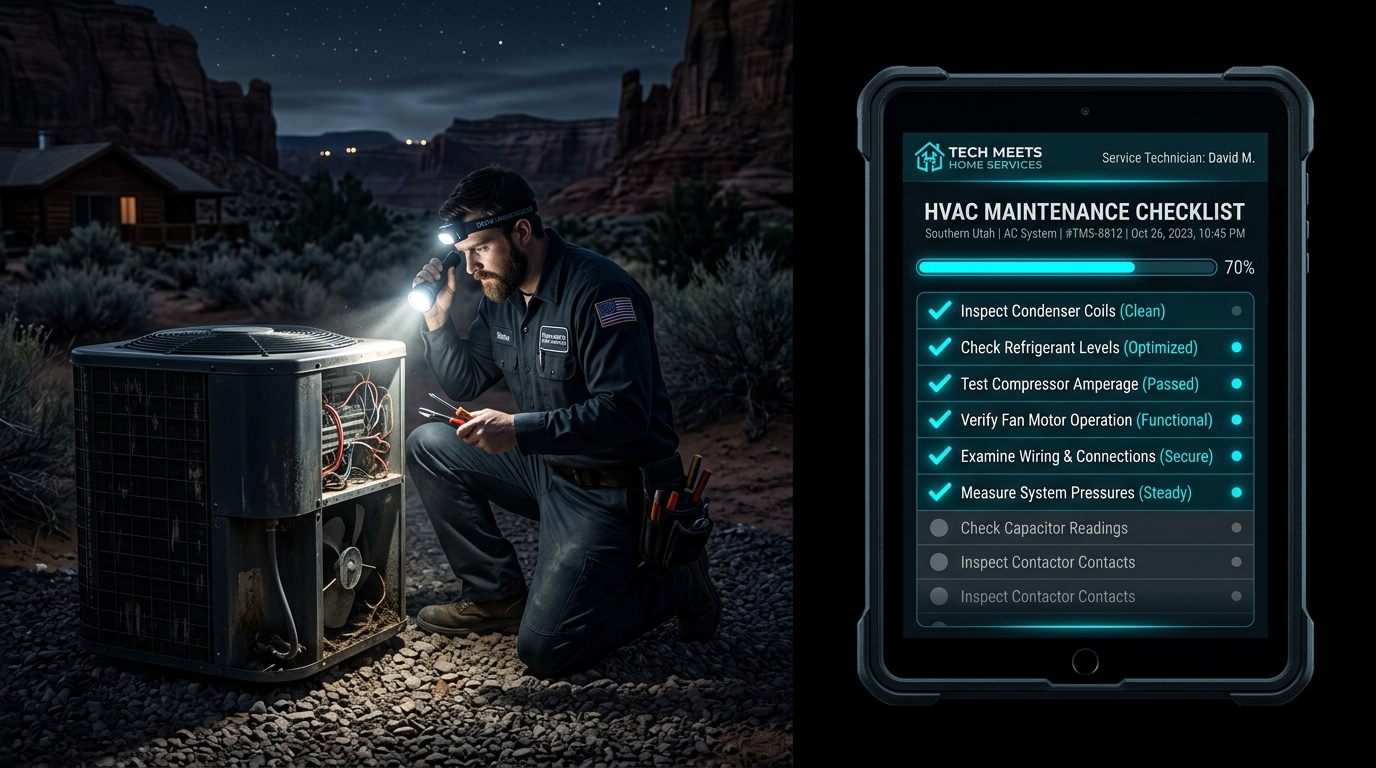
I know a St. George HVAC contractor who tracks the calls he gets in July versus April. The July calls are almost all emergencies — systems that failed in the middle of a 105-degree weekend. The April calls are almost all maintenance — people being proactive.
The ratio tells you everything about what most homeowners are doing.
Here’s the thing: most AC failures in Southern Utah are preventable. The desert climate puts unique stress on HVAC systems — intense heat, sand and dust in the air, wide temperature swings between day and night in the shoulder seasons — but a basic maintenance routine catches most of the problems before they become emergencies.
This is that routine.
Spring: Get Ready Before the Heat Does (April-May)
This is the most important maintenance window in St. George. Your system has been idle since September. It’s about to run continuously for five months.
Change your air filter. This is the single most common HVAC maintenance item that homeowners skip. A dirty filter reduces airflow, makes your system work harder, and can cause the coil to freeze in extreme cases. In St. George’s dusty environment, you should be checking it monthly during cooling season and changing it at least every 60-90 days. In spring, make sure it’s fresh before you fire up the AC for the first time.
Clean the outdoor condenser coil. The condenser unit outside your home accumulates desert dust, pollen, and plant material over the winter. If it’s clogged when you turn the AC on for the first hot weekend, you’re starting the season with reduced efficiency. Hose it off carefully — you can use a gentle coil cleaner spray, but plain water from a garden hose often does the job.
Check your thermostat batteries. This sounds trivial, but it’s a real service call trigger. A dead thermostat in June means you’re without AC until someone can come out. Replace the batteries in April every year.
Clear the area around your outdoor unit. Plants, mulch, and debris accumulate around the condenser over the winter. Give it two feet of clear space on all sides. This is about airflow as much as it’s about fire safety.
Run the system in fan mode first. Before you switch to cooling, run the fan for a day. Listen for unusual sounds. Check that warm air is coming out of your vents — if it’s cool before the system is supposed to be running, you might have a refrigerant issue that needs professional attention.
Summer: Keep It Running (June-September)
Once the system is running continuously, the maintenance is simpler.
Check refrigerant lines monthly. The insulated refrigerant line that runs from the outdoor unit to your indoor coil should be checked for damage to the insulation. In St. George’s sun, the UV exposure cracks the insulation wrap faster than in other climates. Exposed refrigerant line = major efficiency loss.
Keep the condenser clean. During peak cooling season, check the outdoor unit every few weeks. Dust, pollen, and mesquite seed pods accumulate quickly. A weekly hose-off during July and August keeps it running efficiently.
Watch for warning signs. If your system is running but not cooling, if it’s making new sounds, if your electric bills are significantly higher than last year at the same temperature — these are all signals to call a technician in April or May, not July. Don’t wait for a complete failure.
Close your blinds and vents. Sounds simple, but it reduces the load on your system. In St. George’s summer, solar heat gain through windows is a major driver of AC runtime. Blackout curtains or reflective window film on west-facing windows make a measurable difference.
Fall: Shut It Down Right (September-October)
Don’t over-service it in the fall. A lot of HVAC companies push fall “flush and fill” services. For newer systems in St. George, this is often unnecessary. The refrigerant in a properly installed system doesn’t need to be replaced — it doesn’t “burn off” or degrade the way old-timer technicians used to believe.
Cover the outdoor unit in late fall. Not before — St. George October nights are still warm enough that the unit might run. But once you’re past the November temperature threshold, a simple breathable cover prevents winter debris from accumulating in the unit.
Change the filter one more time before winter. Going into winter with a fresh filter means your heating system starts clean in December.
The St. George-specific factors
Water hardness. St. George has very hard water, which affects the humidifier component if you have one. If your home has a whole-home humidifier, the spring maintenance is the time to check and clean the pad.
Dust and filtration. St. George’s desert environment means you’re running your AC more AND dealing with more particulate matter in the air. Consider upgrading to a higher-MERV filter in the spring — MERV 11 or 13 captures more dust and pollen without significantly reducing airflow on modern systems.
Altitude. St. George sits at around 2,800 feet elevation. This doesn’t dramatically affect residential systems, but it does affect commercial RTU (rooftop unit) performance. If you’re a business owner with rooftop units, mention the elevation to your HVAC contractor during maintenance.
This is informational content for homeowners. If you’re an HVAC company in St. George or Washington County, the free AI visibility scorecard will show you whether homeowners in your service area can find you when they’re searching for these answers.
Related reading:
- When to Repair vs. Replace Your HVAC System in Southern Utah’s Climate — the decision guide
- HVAC in Southern Utah: What Homeowners Actually Search For — the search data
- Request a Free Audit →