
Why Every Real Estate Agent in St. George Needs to Think About AI Search Right Now
The real estate lead generation playbook has changed. Google Ads work until they don't. Zillow dominates. But AI search is creating a new channel that most St. George agents haven't touched. Here's what that looks like.
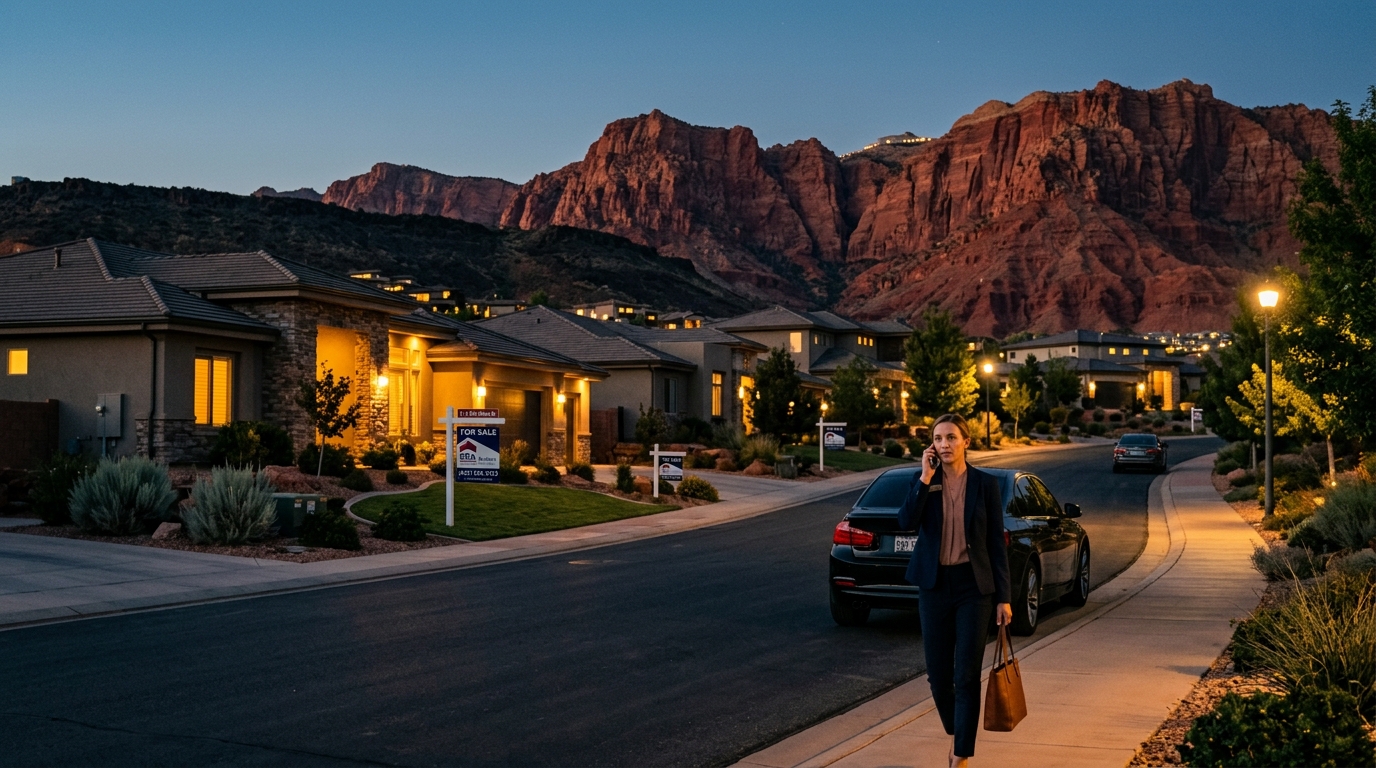
The St. George real estate market has been one of the most active in the country for five years running. New communities going in everywhere, people relocating from California and the Pacific Northwest, snowbirds buying second homes, investors buying rental properties near Zion.
And the lead generation game has never been more competitive.
Most St. George agents I talk to are running Google Ads, paying for leads through Zillow and Realtor.com, or farming their sphere of influence. That playbook works until it doesn’t — and the margins on leads from those platforms keep shrinking.
Here’s what’s quietly changing: AI search is creating a new lead generation channel, and a few agents in this market are starting to capture it.
How AI is affecting real estate searches
When someone asks ChatGPT or Perplexity “what are the best neighborhoods in St. George for retirees” or “is buying a home in Washington Utah a good investment right now,” they’re getting an AI-generated answer. That answer names specific neighborhoods, cites specific data, and — if the right work has been done — names specific agents.
This is different from Google. On Google, an agent with a well-optimized website can rank for “St. George real estate agent.” On AI search, the agent who gets cited is the one who has built the broadest set of authority signals across the web.
What’s different about real estate AI search
Real estate is a high-stakes, high-value category. AI systems take this seriously — the stakes for giving a bad recommendation are higher than recommending a restaurant. That means the signals they look for are more rigorous.
Content authorship. AI systems prefer to cite content that can be attributed to a specific, verifiable person. An agent with a blog on their website, with LinkedIn posts, with contributed articles on local media sites — all of these are signals.
Transaction history mentioned in authoritative sources. Has the agent been mentioned in St. George News articles? The Spectrum? Local business publications? These mentions are training data for AI systems.
Multiple review platforms. Real estate is one of the categories where reviews across multiple platforms matter most. Google, Zillow, Realtor.com, Facebook — each one is a data point.
A website with actual content. The real estate agent website that’s just a lead capture form with a photo and a phone number doesn’t give AI systems anything to cite. The one with market reports, neighborhood guides, and real estate advice content does.
The St. George market specifics
The St. George real estate market has some unique characteristics that affect AI search in ways generic advice doesn’t capture:
Active adult and 55+ communities. This is a massive segment — communities like Coral Canyon, Sunbrook, and the various HOA-managed neighborhoods in Washington and Ivins. Agents who specifically serve this market and have content about it are well-positioned for AI citations in a segment that’s underserved nationally.
Investment and rental property. With Zion tourism driving the vacation rental market, there’s a significant investor segment searching for property management, STR (short-term rental) regulations, and investment analysis. This is an underserved search category that AI systems tend to answer with specific named agents.
New construction. The bulk of new construction in Washington County is happening in specific areas — primarily east of town toward the new communities. Agents with specific expertise in these neighborhoods and content about them have an advantage in local AI search.
What actually works for real estate agents here
The agents in St. George who are getting AI search citations share some characteristics:
They have a personal brand presence online — not just a brokerage website, but their own name, their own content, their own voice. They’re writing about the St. George market specifically. They’re mentioned in local media. They have reviews on multiple platforms.
They’re not trying to outrank Zillow. They’re building a different kind of authority — the kind that makes an AI engine say “this agent is the expert on St. George real estate for retirees” rather than just listing them in alphabetical order.
That authority takes time to build. But unlike Google Ads, which stop working the moment you stop paying, the authority compounds. An agent who builds these signals in 2026 will be very difficult to displace in 2028.
Real estate agents in St. George and Washington County: the free AI visibility scorecard will tell you exactly where you stand in AI search right now — and what to do about it.
Related reading:
- What Is GEO? The Complete Guide to Generative Engine Optimization — the broader framework
- Why Big Chains Show Up in AI Search and Your Local Business Doesn’t — why the fundamentals matter
- Take the Free AI Visibility Scorecard →