
What Every St. George Homeowner Should Know About Plumbing in Southern Utah's Desert Climate
Hard water, shifting soil, and extreme temperature swings create plumbing challenges that St. George homeowners don't face in most other markets. Here's the practical guide to what goes wrong, why, and how to prevent it.
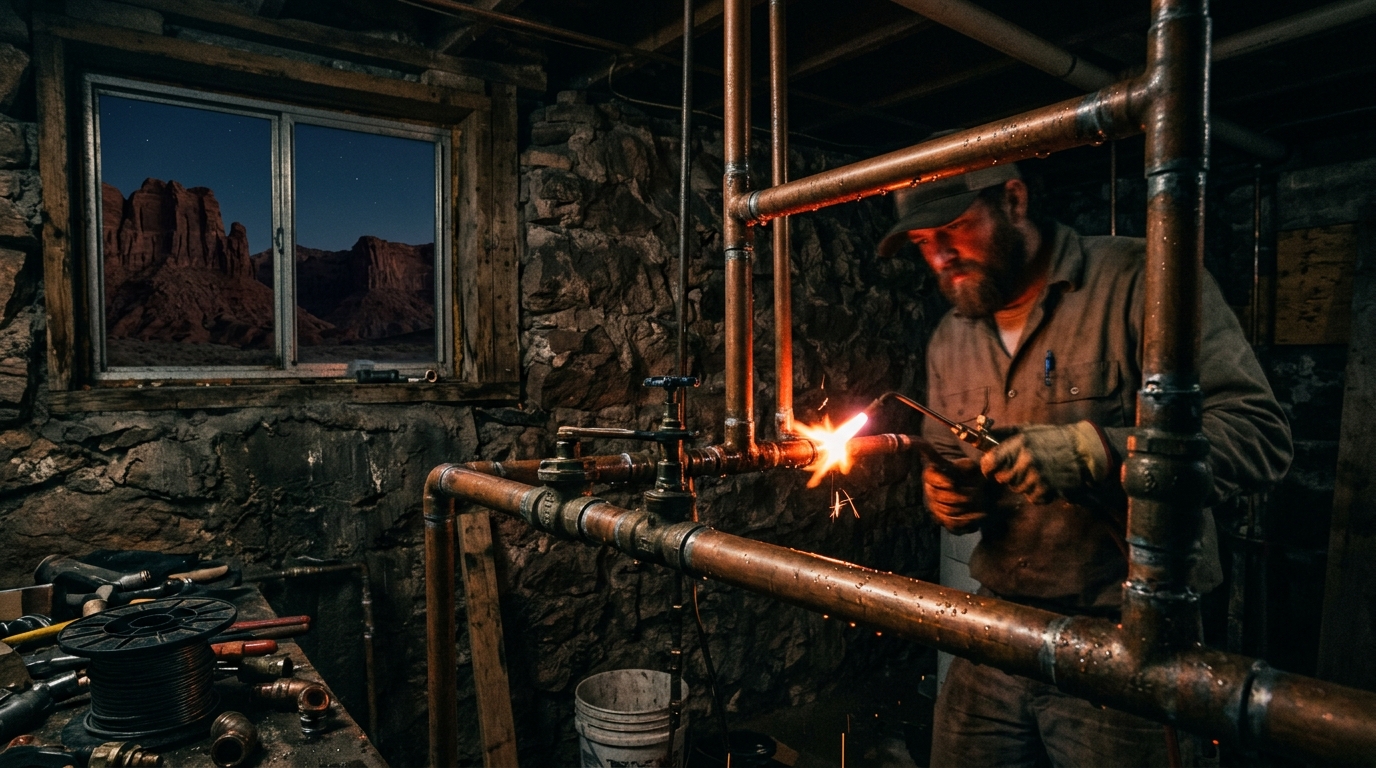
Plumbing problems in St. George aren’t really plumbing problems. They’re geography problems, chemistry problems, and physics problems that happen to show up as leaks, clogs, and water heater failures.
I’ve talked to several plumbers in the Washington County area about what they see most often, and the patterns are remarkably consistent. The desert climate, the hard water, and the soil conditions around St. George create specific failure modes that most homeowners don’t know about until they’re dealing with a flooded garage or a water heater that quit on a Thursday evening.
Here’s the practical guide.
The hard water problem is bigger than you think
St. George has some of the hardest water in Utah, which is saying something. The mineral content — primarily calcium and magnesium — builds up in pipes, water heaters, faucets, and appliances faster than in most other parts of the country.
What this means in practice:
Water heater failures. The average lifespan of a water heater in St. George is 8-12 years, compared to 12-15 in areas with softer water. The minerals settle in the tank, create sediment, and eventually cause the tank to fail. If your water heater is over 10 years old and you’re in St. George, start planning for replacement — don’t wait for it to fail and flood your garage.
Faucet flow reducer. The little screen inside your faucet aerator — the part that makes the stream feel “steady” — clogs with mineral deposits faster here. If your kitchen faucet flow seems reduced, it’s usually the aerator, not the pipes.
Dishwasher and washing machine lines. The inlet valves on major appliances are sensitive to mineral buildup. Replacing supply lines every 5-7 years in St. George isn’t paranoid — it’s preventive.
The fix isn’t complicated. A water softener is the permanent solution. Short of that, adding a whole-home scale prevention system or at least using faucet aerator replacements as a regular maintenance item will extend the life of your fixtures significantly.
The soil shift problem
This is one that surprises people. St. George’s soil is a mix of clay, sand, and砂石 that expands and contracts significantly with moisture changes. Around new construction and in areas with more clay content, the ground shifts seasonally.
What this means for plumbing:
Main line breaks. The main sewer line from your house to the city tap runs underground, through soil that moves. In St. George’s clay-heavy areas, the line can shift, crack, or have root intrusion from plants seeking the water in the pipes. If you have slow drains throughout the house that aren’t fixed by drain cleaning, the problem might be a broken main line, not a simple clog.
Slab leaks. Homes built on concrete slabs in the St. George area are susceptible to slab leaks — water lines that crack under the foundation due to soil movement. Signs include unexpectedly high water bills, damp floors in specific areas, or the sound of running water when nothing is on. If you suspect a slab leak, it needs to be addressed quickly — the longer water sits under a foundation, the worse the damage gets.
Visible pipe damage. Polybutylene pipes — a type of plastic water line used in homes built between 1978 and 1995 — are particularly prone to failure in areas with aggressive water chemistry. If your home was built in that period and you haven’t replaced these lines, it’s worth having a plumber assess them.
The temperature swing problem
St. George has one of the widest annual temperature swings of any city in the US. Summer days hit 105°F. Winter nights drop below freezing. That 80-degree annual swing affects exposed pipes, outdoor spigots, and water heaters.
Outdoor spigot failures. The anti-siphon valves on outdoor faucets take a beating in St. George’s climate. They’re exposed to sun, freezing nights in winter, and intense use in summer. If you turn on your hose bib in April and it drips, the internal parts likely need replacement. This is a $5 part and a 10-minute repair — don’t ignore it until it fails completely and sends water into your wall.
Water heater venting. St. George’s temperature extremes affect water heater efficiency and venting. Gas water heaters in particular can experience drafting issues when outdoor temperatures are very different from indoor temperatures. If your water heater makes a gurgling sound or you smell gas near the unit, call a plumber — this can be a carbon monoxide safety issue.
What to do now
Find your main water shut-off. Before anything goes wrong, know where your main water shut-off is. In most St. George homes, it’s near the water meter or in the garage. If a pipe bursts, the first thing you need is to stop the water. Knowing where this is before an emergency could save you thousands in water damage.
Get your drains cleaned annually. Not because they’re clogged — because the camera inspection that goes with a good drain cleaning will catch problems before they become emergencies. Tree root intrusion, offset pipes, and early-stage clogs are all visible on a camera run. A $150 annual drain cleaning is a lot cheaper than a $3,000 main line repair.
Check your water heater’s age. Look at the serial number on your water heater. If it’s over 10 years old, get a plumber to assess its condition. If it’s over 15, assume you’re on borrowed time.
This is informational content for homeowners. If you’re a plumber or plumbing company in St. George or Washington County, the free AI visibility scorecard will show you whether homeowners can find you when they’re searching for emergency plumbing help.
Related reading:
- Why Southern Utah Contractors Are Invisible to AI Search — the contractor perspective on this market
- What St. George Businesses Get Wrong About AI Search in 2026 — broader context
- Request a Free Audit →