
How to Choose a Contractor in St. George Without Getting Burned
Hiring the wrong contractor in Washington County can cost you tens of thousands. Here are the questions to ask before you sign, the red flags to watch for, and what separates a contractor who'll do the job right from one who'll leave you with a mess.
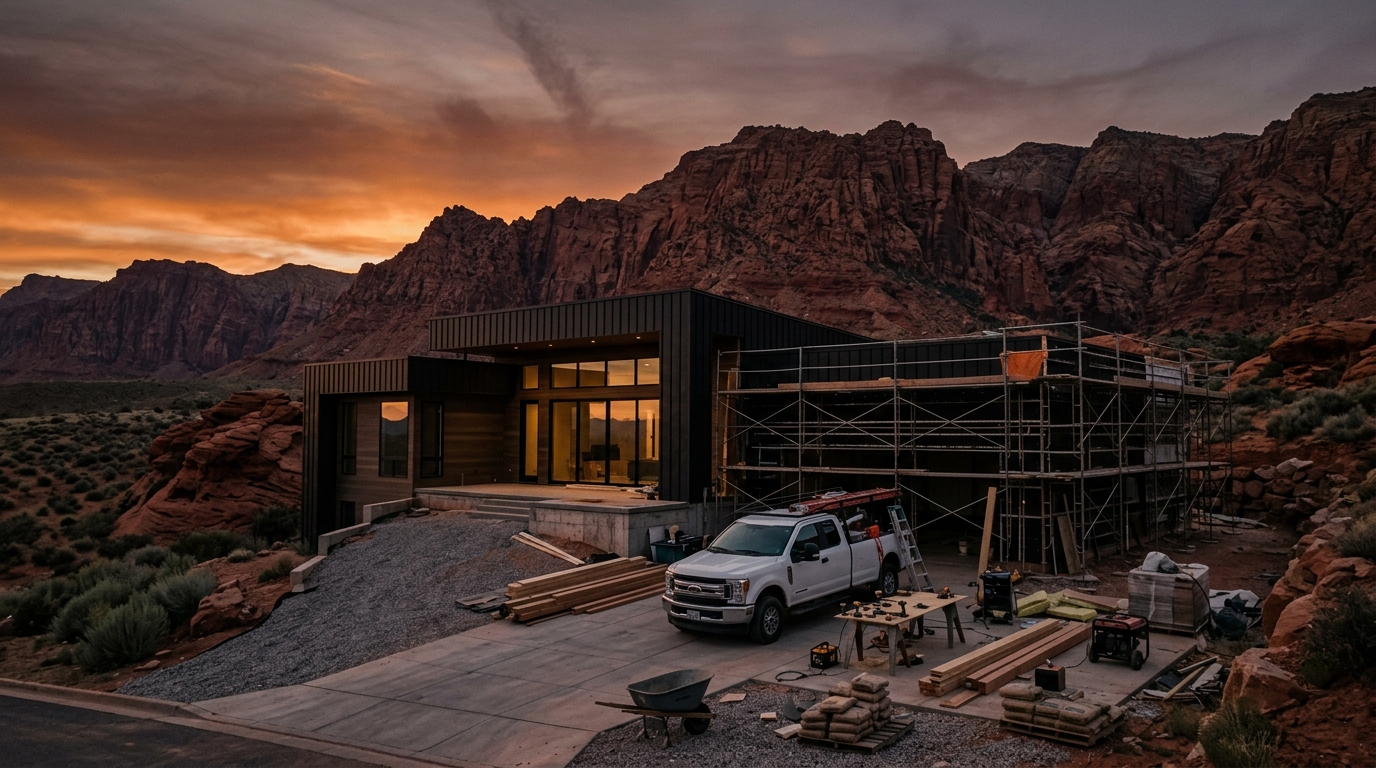
I talked to a homeowner in Coral Canyon last year who hired a contractor for a kitchen remodel. The bid came in $8,000 below the next lowest bidder. The work started well. By the end of the third week, the contractor had cut corners on the plumbing, left electrical work unpermitted, and stopped returning calls.
Getting the job fixed cost more than the original bid.
This story is common enough in the St. George area that it’s worth writing down exactly how to avoid it.
The questions to ask before you sign anything
Are you licensed and insured in Washington County?
This is the first question and the most important. Utah requires contractors to be licensed through the state Division of Occupational and Professional Licensing (DOPL). Verify the license number at dopl.utah.gov. Ask for a certificate of insurance directly from their carrier — not a copy of a policy, a certificate. The certificate shows you as additionally insured, which means if someone gets hurt on your property, you’re not liable.
Who will be doing the actual work?
The person who gives you the bid might not be the person who shows up to do the work. Some contractors sell the job and sub out the labor. That’s not automatically bad, but you have a right to know who is actually going to be in your house, what their qualifications are, and how long they’ve worked for this company.
What does your warranty cover?
Most material warranties come from the manufacturer, not the contractor. But the contractor’s workmanship warranty — what they cover if something they built or installed fails — varies enormously. A contractor who offers a 1-year warranty is making a different promise than one who offers a 2-year warranty on labor. Get it in writing.
What’s your change order process?
Every project has changes from the original scope. That’s normal. What matters is how your contractor handles them. A good contractor will document every change in writing, get your signature before doing the work, and give you a clear accounting of the cost. A bad contractor will do the work first and hand you a bill later.
Can I see your last three completed projects?
Any contractor worth hiring can show you work they’ve done in the last year. If they hesitate, if they can’t produce addresses, if they say “I can have the homeowner call you” but then don’t follow up — those are signals.
What does your cleanup include?
This sounds trivial but it’s not. Construction debris, dust in the ductwork, materials left in the yard — these are real sources of contractor disputes. Before you sign, ask specifically what’s included in cleanup and when they’ll leave the site.
Red flags that should end the conversation
Cash discount. Any contractor who offers a significant discount for paying in cash is avoiding the tax man. That means they’re also avoiding accountability. If something goes wrong and you paid cash, you have no paper trail.
Full payment upfront. A reasonable down payment for a major project is 20-30%. Some contractors ask for more. A contractor who asks for full payment before starting is a contractor who has calculated that they’re unlikely to finish.
No physical business address. A contractor who operates out of a PO box or just their truck is harder to hold accountable. You want a physical address you can visit if needed.
Pushy sales tactics. If someone shows up uninvited, pressures you to sign today, or creates urgency with phrases like “I’m giving you a special price that’s only good if you sign now” — walk away. Good contractors don’t need to pressure people.
Very low bids. A bid that’s significantly lower than others you’ve received isn’t a reason to celebrate. It’s a reason to ask specific questions about what’s included and what’s not. The $14,000 bid that doesn’t include the $4,000 of structural repair that the $24,000 bid accounted for isn’t a better deal.
What St. George homeowners should know about permits
Washington County requires permits for most significant construction work — structural changes, electrical upgrades, plumbing modifications, HVAC replacement, roofing over a certain square footage. Your contractor should know this and include permit costs in their bid.
The permit process exists to protect you. It ensures that the work is inspected by a third party — the county inspector — who verifies it’s done to code. A contractor who suggests skipping the permit to “save money” is saving money at your legal risk. If unpermitted work causes damage or doesn’t pass resale inspection, it’s your problem, not theirs.
Pulling the permit is also your right as a homeowner. You can pull it yourself if your contractor won’t. The county building department is straightforward to work with in Washington County.
The St. George-specific context
A few things specific to this market:
Contractors from out of town. St. George’s growth has attracted a lot of out-of-state contractors. Some are excellent. Some are here for the building boom and will leave mid-project when the work elsewhere picks up. Ask how long they’ve been working in Washington County specifically.
HOA requirements. Many St. George neighborhoods — particularly in Ivins, Coral Canyon, and the newer communities east of town — have HOA requirements that affect what you can build, how it looks, and when you can build it. Your contractor should know this. If they don’t ask about your HOA before bidding, that’s a gap.
Subdivision specific requirements. Some of the newer developments in Washington and Hurricane have subdivision-specific CC&Rs (covenants, conditions, and restrictions) that go beyond the county requirements. A contractor unfamiliar with the area might not know this until they’re halfway through the project.
This is informational content for homeowners. If you’re a contractor in Washington County and you want to reach homeowners searching for these questions, the free AI visibility scorecard will show you whether you’re showing up in those searches.
Related reading:
- Why Southern Utah Contractors Are Invisible to AI Search — the business side of this market
- How Much Does a New Roof Actually Cost in Southern Utah — cost guide for one of the most common projects
- Request a Free Audit →