The Businesses Zion Visitors Actually Need (That They Can't Find Online)
We talked to tourists, looked at the search data, and mapped what visitors to Zion and Southern Utah actually need versus what's easy to find. The gaps reveal real opportunities for local businesses.
A few months ago I started asking a simple question to every tourism business owner I talked to: when tourists have a problem or a need during their trip, where do they go?
The answers were revealing. The business owners who were doing well all had the same pattern — they showed up in search when the tourist needed them, not just when the tourist was looking for them.
The ones who weren’t doing well? They were waiting for the tourist to walk in the door or call. And they were frustrated that Google Ads rates kept going up while results kept going down.
So I went looking at the actual gaps. Here’s what I found.
The needs tourists actually have
When I looked at travel forums, Google search data, and AI search results for Zion-area queries, a clear picture emerged. Tourists need:
- Gear and supplies — forgot something at home, didn’t pack for the elevation, need a replacement for something that broke
- Food and restaurants — especially quick options between parks, early breakfast before sunrise hikes, late options after a long day
- Vehicle services — flat tires, windshield chips, AC problems (it hits 95 degrees in Springdale by May)
- Medical and wellness — urgent care for injuries on trail, pharmacies, even dentists for sudden tooth problems
- Logistics services — shuttles between airports, gear rental, pet boarding for day hikes, storage for luggage
- Services for their rental — cleaning companies, handymen for theVrbo/HomeAway cabin that has a broken dishwasher
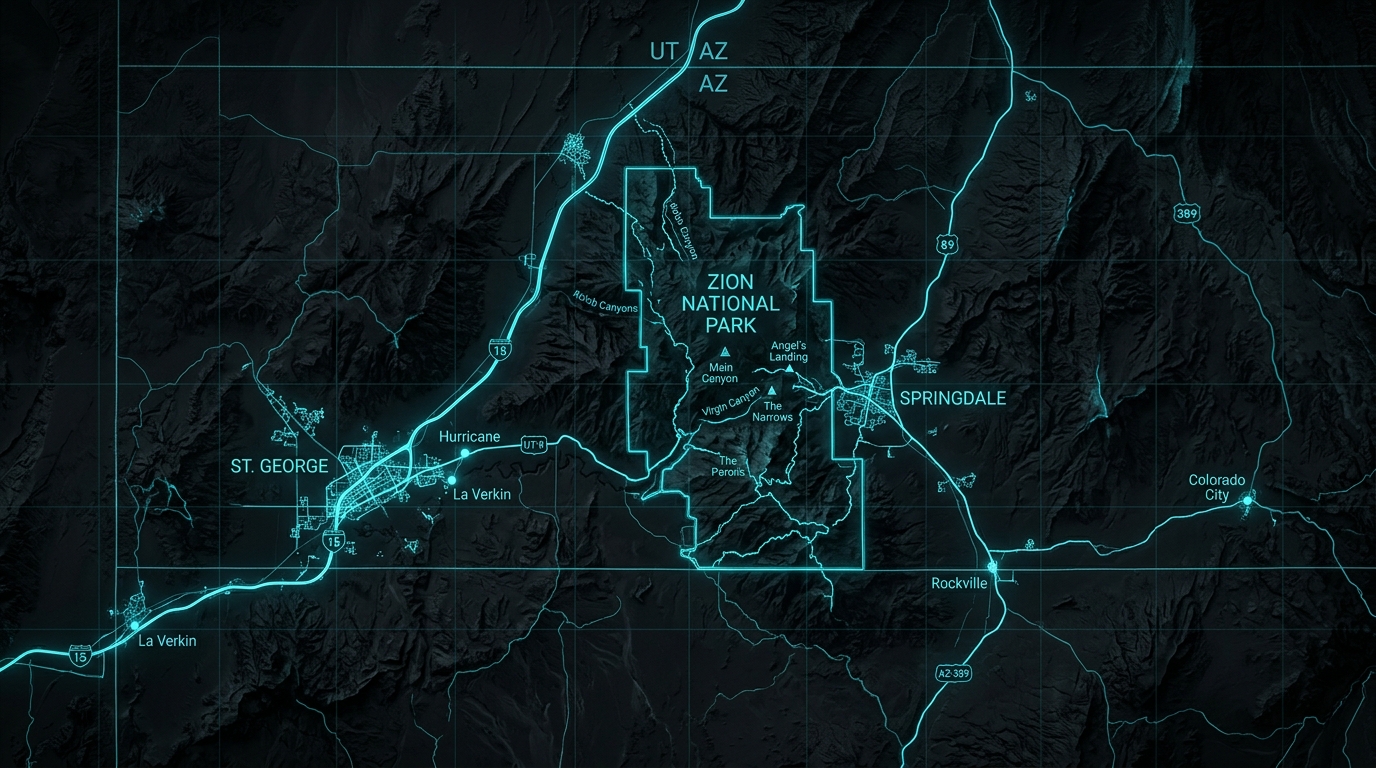
Now compare that to what St. George and Springdale businesses actually market online. The restaurants are there — some of them. The hotels are there. The obvious things are there.
What’s almost completely missing?
What’s actually hard to find online
24-hour anything. Tourists have emergencies. Their kid gets sick at the campsite. Their rental car has a dead battery at 8pm. Their hotel AC goes out in July. There’s almost no 24-hour presence in St. George’s service economy, and the ones that do exist don’t market it. This is a massive gap.
Shuttle services beyond the park shuttle. The Zion Canyon Shuttle is the National Park Service’s shuttle inside the park. But tourists need rides from St. George airport, from Las Vegas, between towns, to trailheads that aren’t on the NPS shuttle route. Almost none of this is findable online.
Last-minute gear replacement. This one surprises people. Zion backpackers forget things, break things, realize they underpacked. The gear shops in Springdale are small and expensive. There are no big outdoor retail options between St. George and the park. This is an enormous gap.
Veterinarians and pet services. Zion is a huge dog destination. Tourists bring dogs, dogs get hurt or sick, dogs need heartworm medication for a week in the desert. Finding a vet near Zion isn’t easy online and the options are thin.
Rental maintenance and cleaning crews. The vacation rental market in Southern Utah is enormous — hundreds of homes in St. George, Hurricane, Washington, and the Zion corridor that are rented on Airbnb and VRBO year-round. The property managers and cleaning crews who service these rentals are incredibly busy but almost invisible online. If you’re a cleaning company that can turn a rental in four hours, you’re a critical part of the tourist economy and almost nobody knows you exist.
Activity booking beyond the obvious. Tourists want to book activities before they arrive — via tours, zip lines, guided hikes, via ferrata routes, SUP rentals. Most of the operators in the area don’t have strong direct booking or even clear information online. They rely on TripAdvisor and Viator, which take a significant cut.
The common thread
Every gap has the same root cause: the business didn’t make it easy for a tourist to find them online in a moment of need.
Not because they don’t have a website. Most of them have a website. Because their website and their online presence doesn’t answer the specific questions a tourist is asking — in the format those questions are being asked — with enough signals of trust to convert.
A tourist searching “emergency vet near Zion” doesn’t want to read your three-paragraph “about us” section. They want to know: are you open right now, how far away are you, and can I trust you with my dog.
That’s it. If your website answers those three questions in the first five seconds, you’re ahead of 90% of the local businesses in this market.
What this means for local businesses
If you’re a business in St. George, Hurricane, Washington, or Springdale, you have two reasons to care about this:
One: You’re probably missing the tourists who would become your best customers if they could find you in the moment of need. Not the tourists who are price-shopping — the ones who have a problem right now and will pay whatever it costs to fix it.
Two: The businesses that figure this out first are going to build something durable. AI search engines are getting better at answering local questions. The businesses that have structured, verifiable information online right now are building the signals that will make them the answer in 12 months.
Getting found isn’t about advertising. It’s about being findable. And in the Zion tourism corridor in 2026, being findable is still mostly wide open.
If you run a service business in the Zion corridor and you want to understand whether tourists in your category can actually find you online, the free AI visibility scorecard will tell you exactly where you stand.
Related reading:
- How Tourists Actually Plan a Zion Trip in 2026 — the full picture of the tourist search journey
- How Retail and Gear Shops Near National Parks Can Get Found Online — the specific opportunity for gear shops
- Take the Free AI Visibility Scorecard → see where your business actually shows up